
Thursday
cultural influences
We currently live in a culture that is unabashedly obsessed with smart phones, laptops and an array of other tech devices. Leaving home without them is out of the question. And to have phone or computer running out of juice could be catastrophic, leaving an individual completely disconnected from the world. Enter the "juice bar". These stations are common at air ports, sporting arenas, shopping malls and other communal places. The design is obviously driven by our culture's need to always be connected. Seating areas at airports will often have several stations making it all the more accessible for someone who needs a charge. This particular design even has signage and lighting reaching vertical making it more visible in a crowded area. As technology evolves and new phones are released the design will change in order to accommodate.


Tuesday
revival-reform
Revival and reform are both terms which borrow from the past . When reforming you are making changes to something that improve upon it's current state. When a revival occurs you are looking back to something from the past, bringing it back in to activity.
Reform is an important concept for design. Design and architecture borrow from the past all the time but sometimes there are improvements that can be made. Perhaps a designer is inspired by a home design from the past and wants to borrow from that design to create something current. Many homes from previous periods would have a floor plan that wouldn't work for today's families, and would need to be reformed. In this case the designer is able to look to the past for inspiration and then improve the design to make it more functional for today.
Thursday
foundations
These familiar lines and shapes come
together to form humanity's first elements and principles. These
elements and principles repeat them selves over and over again
through out history. Circles, groves and stacks, whether used
individually or combined serve as the foundation for all architecture
we have seen thus far. If you take a look at Stonehenge and many the
many other formations similar to it, it is easy to see the use of a
circle formation. Within Stonehenge you can also see groves. Large
stones are lined next to each other to create a form. Egyptian
pyramids are a good example of Stacks. Layers of stone are stacked on
top of each other, together they form a grand structure. Ancient
temples are formed by the combination of stacks and groves, as are
many other structures we are familiar with.
This combination of groves and stacks
is used over and over again in ancient Greece. There are a row of
columns lining the front of the structure and stacked above it is a
pediment. The columns are strategically placed so that the human eye
views them as being symmetrical. After Greece, there is Rome, who
mimicked much of what we saw in ancient Greece. Romans created
structures using what they learned from the archetypes created by
Greece, but the Romans were focused more on the surface of the
building than they were the substance. Known to make things as grand
as possible without following the processes that were used before
them. Upon the development of the arch the Romans were able to build
on a larger scale than ever before.
This notion of building things on a
grand and elaborate scale carried over in to Gothic cathedrals as
they were being built. Large arched windows were used to allow a lot
of light in. It allowed a larger space in which stained glass windows
were placed. Stained glass windows were a tool used to convey a
message to those entering the cathedrals. Plans for cathedrals went
through an evolution before eventually different plans in to one. The
plan is one we still see today, two sections that intersect at a
circle in the middle.
With each period covered we see a
common theme and that is, each one is borrowing ideas and
practices from those that came before them. The Design repeats itself. History serves as a foundation and inspiration for new design and architecture.
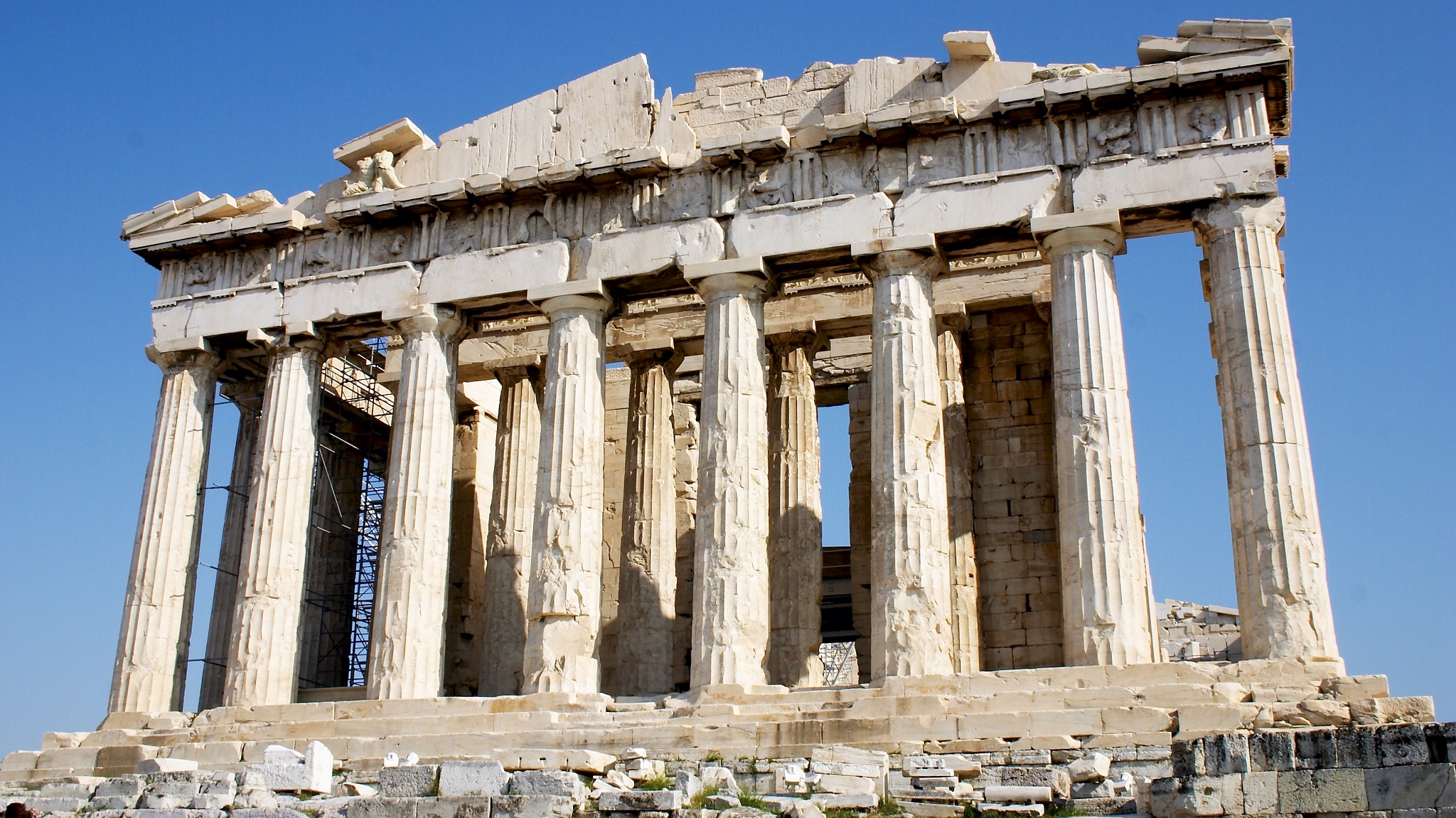
national style
As America
was developing its own style they looked to Greek Architecture for inspiration.
This new and uncertain nation want to create structure that would create an
image of strength and power, just as Greece had been. Public building
and some personal residences reflected this National style. Creating a national
style is creating a story, through architecture, that the country wants to be
retold. Creating a general feel that carries over from one building and space
to the next. I think today’s national style is much less consistent than it was
during the Greek revival. Although many of our public buildings, especially
government buildings, still reflect this Grecian style. But overall all there
is more variety seen in our nation’s public buildings. Our national style is
many different styles.

Wednesday
palladian tendencies


Lexington, KY
Tuesday
revolutionary
The time surrounding the Revolutionary
War was a time when people were showing great interest in furniture.
As a result of this interest, furniture was being produced in the
anticipation of a sale rather than upon commission only. I think what
was most revolutionary about this time was the variety of types of
furniture being made. High style furniture was a way for individuals
to display their wealth. But the furniture being produced was not
only for the wealthy, vernacular furniture was being made for more
common homes. This notion of variety also relates to Charles
Montgomery’s idea of how America really looked during the colonial
period. Each colony was making things that looked different than the
next. The furniture being produced by each was a reflection of their
locale. Using materials indigenous to their area and using their own
individual processes of furniture making.
jefferson street revival
.JPG)
Subscribe to:
Posts (Atom)