
Monday
who leads design?
Is it possible to pinpoint who or what leads design? Designers are inspired by what is going on around them, it is these surroundings that lead design choices. The discovery of a new material may inspire a slew of designs that use this material. Design in colonial times was inspired by a desire to establish themselves as a respected and powerful. Design can be lead by the desire to create something new and unseen. Design is lead by a complicated and intertwined chain of events. Events that at first glance may seem un related to design, when in actuality that play a large role in design development. Like the intertwining shapes and colors of the mosaic below, factors that lead design are complicated and it is difficult to dissect exactly where a design began.


international style
International style in the 1960's can be explained as something that lacked overt influence from previous periods. The surface of an international style structure is unadorned promoting an aesthetic that could speak to many. This style made no reference to history and could be placed in any climate or location. To speak of global is to imply that something, be it a product, belief, technology etc.; interacts all around the world. To me global is more about how intertwined an object or idea is with the world, and international is more so a notion that has the potential to be placed in various places around the world.
Tuesday
Eames
In 1957 Charles and Ray Eames designed this solar toy. It was meant to draw attention to the sun as an affordable and renewable energy source. The toy is made of aluminum and as the shapes twirl and rotate they eventually convert the light to energy. The toy was not made to be sold. The toy was however made to tour in hopes of igniting a change and drawing attention to the potential use of solar machines in future designs. I think that this is a good example of the innovation and creative thinking that was occurring during the mid twentieth century. This was a time when people were longing for change, not only in design but socially as well.


Thursday
commercial + residential of 1950's
During the 50's and 60's a lot was changing in both commercial and residential design spheres. A typical home from this era would look like the one pictured below. People were still ordering from catalogues and were very concerned with keeping up with what their neighbor was doing. This was a time about creating the perfect image of a family and household. What resulted was a great deal of similarity from one home to the next. Although this type of home was certainly not all that was happening in residential design it certainly was a large part of it.
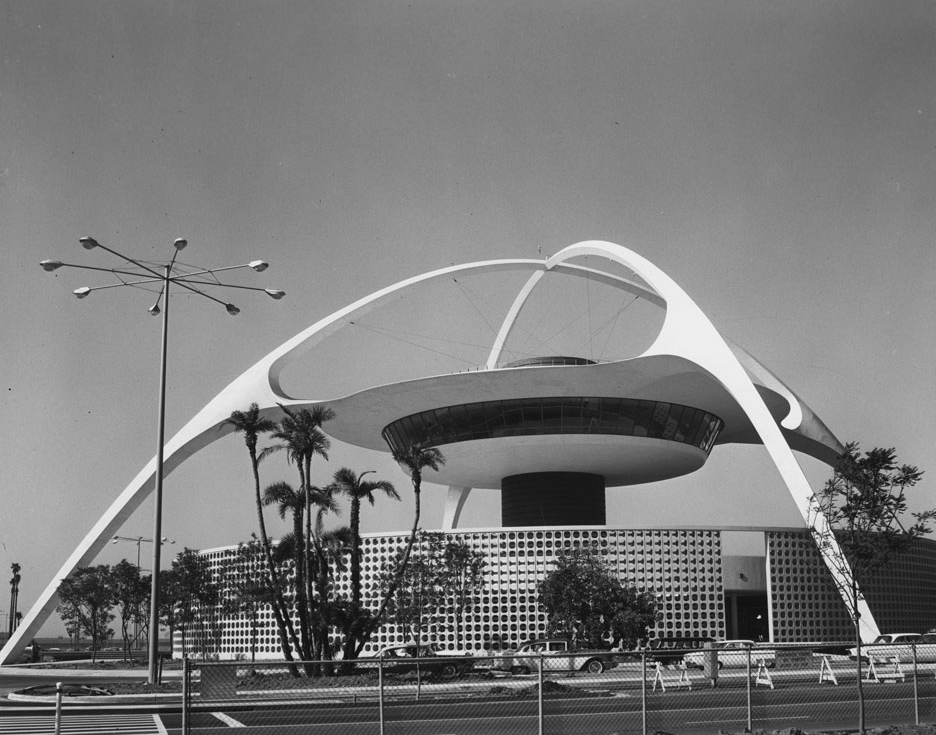
Commercial design however was more concerned with being the first to do something, this resulted in a lot of forms that were very different. During the time of the atomic age and the race for space, structures had a very futuristic feel. They were easily differentiated from one another unlike most homes of the era.

Tuesday
revolutionary material
Iron in it's least processed form, cast iron, is much too brittle to be a reliable material for large construction. The development of iron in to steel created a much stronger material and revolutionized buildings. Steel allowed buildings to form completely different shapes and reach heights that would otherwise be impossible. This revolutionary material allowed designers to execute building designs that previously had only been possible in thought.
Wednesday
post war
Following World War I & II is the emergence of modernism . New buildings were designed with simple forms that made no reference to history. These stripped down versions symbolized the removal of influence from other countries and the creation of something new. Architecture did not involve a lot of surface ornamentation as it had in the past. New designs were more focused on creating something that emphasized function and the methods or materials that were used to create the structure.
Tuesday
modern
Modern is a term that is often used to describe a design aesthetic. I think that a modern design is less about aesthetics and more about it's timing. As we know, design is a discipline that repeats it's self over and over. What was once considered modern will likely come back around to be considered modern again. A modern design is current. Sometimes the newest designs are completely original, not resembling designs that preceded it. There are designs that may be considered modern, but also borrow from the past. The armchair designed by Stephen Kenn seems to be influenced by designers that led the way many years ago. There are elements that remind me of the Marcel Breur's Wassily chair and Gerrit Reitveld's Red Blue chair. Kenn's armchair and other pieces from his Inheritance line are made using repurposed army surplus from WWII. This notion of recycling and repurposing is also a common theme to many modern designs. This chair that uses 70 year old materials and is influenced be designs even older than that, is now modern. Because it is what is being produced in the current era.

Subscribe to:
Posts (Atom)